January 21, 2022

A hostile atmosphere and rescue of a 16-year-old girl

The 16-year-old tribal girl’s fate was sealed in a room with no door. 

She was now like a caged bird. She would not be able to come out of the tiny room . Four walls and a slab roof were raised.   Before the last portion of a wall was constructed, she was sent into the room. That was to be the end of her contact with the world.

Like others of her age, she would no longer be able to run around and play. Like others in her community, she would not be able to join in the celebratory dances.

The girl was now deprived of all her freedom. The  parents and family were fine with it. The relatives were happy. The man who celebrated this most was the girl’s brother-in-law.  He had constructed what he described as a temple and the living deity was the girl. She was no idol. She was a living person, breathing. If the room was sealed without even as much as a door, where would she get air to breathe? Good question. Would she be deprived of food too? Was this not practically burying her alive?

It was in her brother-in-law’s interest to keep her alive. So, he provided a window, about one feet by one feet. It was sealed with a grill. Through that the girl was given food to eat to survive.


Word spread about this in the neighbouring villages. People started making a trip to visit the deity and pay their obeisance. The village gained fame. The notoriety of the brother-in-law was more than evident for someone sitting like me in Hyderabad.

I decided to make a trip to this village in Mahbubnagar. I took a bus with my photographer. This was during 1997-98. I made enquiries in Hyderabad itself on how to reach the village. The bus would stop close to the village. I got down the bus. Would it take five minutes to walk to reach the village? “How close is it,” I asked people on the road. “Koothakotha dooram,” the first man responded. He had given the right answer. This is what I had come to know  before I started from Hyderabad. The literal meaning is that it was as close as  the sound of a bird’s cry could be heard. “Walkable?” I asked. “Walkable,” those on the road said. I heard the chirping of birds. I heard the cry of the crow. Going by that, I should have reached the village in 10 minutes, if not five. “Which way to the village?” I asked passersby. “Proceed straight,” they guided. “How far?” “Just ahead of those big trees visible.” There was no village there. “You have to walk slightly further,” I was told. I walked slightly further. I could only see the road expanding before me.


The journey was more arduous than I had imagined. It took one and a half hours to reach the village – by walk. Midway, a question arose. If this is how long it will take to reach the village, how would we be able to spend enough time there and return back to catch what would probably be the last bus towards evening to take us back to Hyderabad? “There’s no turning back,” I told myself. The purpose had to be achieved.

The village was lively. There was a trickle of people. I was given directions to the house of the girl’s parents. They took me to  show their daughter enclosed in a room. “Food is given to her from the window,” they told me. I had questions. What about nature’s call? “She uses the room itself,” was the answer.

I asked them to call the girl so that I could speak to her. They did not. They did not want to. But I wanted to speak to the girl. I was disallowed. Then I sought to know if she indeed was there in the room? That is when they called out to her and she responded in a low voice. But she would not come face to face to the window. She was not allowed to.

How could it be acceptable to the family, the relatives and people of the Thanda (a lambada hamlet) to enclose a girl in a small room and cut of her contact with the outside world? But everyone seemed okay with the arrangement. Okay was not okay for me.

I went around speaking with more people in the village as to what they thought of this. Some shied away from the question. This, for me, was a good sign. If some people were refusing to answer, it meant there were hiding their genuine opinions, which went against the popular opinion. Refusing to express an opinion was an indication that they had an opinion. I went around casually speaking to more people in the village. This time the questions were not piercing. The questions were not to sound interrogative. Chatting up casually was the best thing to do.

The villain, it turned out, was her brother-in-law. The mastermind had a clever plan, as it turned out. He had gone to Bombay to make a living as a construction worker. “He kept coming and going to Bombay. And now he intends to settle in the village itself,” a villager told me. The intent was clear. A hundi that was kept near the room said it all. People coming from the villages nearby would make an offering. That would be his source of earning.


It was to get this money that he conceived this idea of making a deity of the girl. This was criminal intent. This was a clear case of exploitation of a girl. My probe was complete now. I was  keen on to rush back to Hyderabad. Would I get a bus? The weather seemed pleasant. It was cloudy and the walk back was not difficult, more so because my mind was light because of the information that I had been able to gather.

The wind was not pleasant anymore. It was more like a gale. So strong was the wind that I had to run for cover. My photographer and I took refuge under a tree. The danger was that the tree would probably get uprooted because of the wind. There were no houses close by. No vehicles were passing that way. No shelter around. The tree became unreliable for protection.

My feet were literally giving way because of the heavy wind that was blowing. It was clear that we would be swept away. There was to be no doubt about it. Not realising this was foolishness. Before we ran into this tumultuous weather, we came across another journalist friend, who was headed to the village that had come from. I wondered about his safety. As for me, I decided to lie down now. I held on to the grass and ground. Resisted the strong wind.  There was a high chance that we would get blown away by the mind and land somewhere – alive or not was another question.

We held on to dear life. The wind subsided after a harrowing experience that we went through. Reached Hyderabad. Published the story in the newspaper. The exploitation of the girl was highlighted. The administration promptly responded. The girl was set free from the cage of walls that had been built for her by her greedy brother-in-law who wanted to make money through her. The reports that my other journalist friend wrote and what we reported were more than enough for the authorities to understand what was going on in the Thanda.  

January 19, 2022

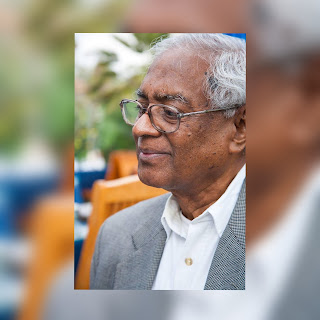
Sam Rajappa thought of a plan. Unusual. Daring. To land in jail


  “So, I managed to get lodged in the jail,” Rajappa told me. 


Sam Rajappa's entire focus in life at that point of time was to get jailed. He was eager to enter the prison. And stay there within its four walls, sacrificing his freedom.  Who would want to end up in jail? If there are life goals, this one is not included in anyone’s list. It sure does not figure in the bucket list of anyone.

In Sangareddy district of Telangana, there is an old jail where you can pay and spend time in jail and experience the spirit of ‘lack of freedom’. But that is a luxury. You ask for it. Get it. ‘Jail tourism’ is promoted so as to give people a chance to spend time in the decades old structure. If a jail cell is what one gets to see in movies and form an opinion about, this prison gives up the atmosphere because it originally was a jail before a new building was constructed.

We are not talking about jail tourism here. It was about breaking into a jail itself. Sam Rajappa worked for the Statesman and a journalist respected in the profession. “How could you think of landing yourself in jail?” I asked Rajappa. “Getting into the jail was the only way out,” he said. How did he manage to do it? But pray why would anyone want to land in jail? Rajappa did not want to land in jail. He wanted to land in that jail. There was a purpose. A need. And a burning desire to dig for the truth. The truth, he knew was bound in the lock-up of a police station. If he had to bring out the truth, he needed to break into that jail. Breaking into a jail is not as simple as walking into a cafĂ© to have a cup of tea. It is not like entering a park to take a stroll.


To enter a jail one must get arrested. To be arrested, one must commit a crime. To commit a crime one must take some hard decisions. Rajappa did not commit a crime but devised a plan. A simple act of breaking the law itself could land him in prison. No harm to anyone. The journalist in the soft-spoken Rajappa was on fire. It was within. There was a larger cause.

An engineering student had vanished. It was assumed that he was picked up by the police. There was reason to believe that. But what happened after that? Where was he? No one knew. The police denied any knowledge of him. P Rajan was a student of Regional Engineering College, Calicut (Source: Wikipedia). There was no trace of him since March 1, 1976.

Somewhere, the truth was bound in chains and kept away from the reach of anyone. If Rajan was picked up by the police, something that they denied, Rajappa wanted to get to the truth. “Another student was also arrested by the police and lodged in the jail. If only I could get into the jail, I knew it would give a chance to speak to him and find out what happened directly from him,” Rajappa told me.

Who was Rajappa and who was I? And why was I discussing what happened more than 50 years ago with him.

I wanted to speak with Rajappa. It had been a long time. Long time, since both us stood in a court room to stand for trial in a case that had been booked against us in Hyderabad. This was also in connection with our professional work during the late 90s. Rajappa used to fly down from Chennai to attend the court proceedings. It was about a report that was published in AP Times for which he was Editor during 1996-97.  I was a reporter in the newspaper and was the one who had written the articles. Sam Rajappa who was a well-known and respected journalist all over the country for his exploits  stood showing all due respect to the court. I would always make it a point to accompany him till the gate of the Nampally criminal courts and wait until he got into an auto.

One could wave an auto and get into it. How could one simply walk into a prison and ask to be lodged there? Only a court could direct that someone be sent to jail. Let’s get back to the famous Kerala Rajan case. “I had friends,” Rajappa said continuing our conversation on the phone. He had friends who could get him to be lodged in a jail! Everyone did their part and Rajappa successfully entered the jail, rightfully. He had broken into the jail and he had a right to be in jail! “I met Rajan’s friend in jail. He explained to me what had happened with Rajan. I got it directly from the one who saw it, the only man who knew,” Rajappa recalled as our phone conversation continued, perhaps for more than an hour.

The adventure, something that hardly anyone would want to take, got Rajappa to the truth that he was so much craving to get to. Through his reports in the newspaper later, the true investigative reporter that he was, Rajappa brought out the facts. Eventually, the police had to admit that they indeed had picked up Rajan and he had died in police custody. For Rajan’s father Eachara Warrier who had knocked on the doors of the courts seeking the whereabouts of his missing son, the investigation done by Sam Rajappa was crucial.

The daring act of Sam Rajappa to take his investigative skills into the prison became a talking point in the country in the 1970s.

“Journalism was not my first interest,” Rajappa told me as we continued our conversation. He had strayed into it. And stayed in it. Journalism did not want to leave him. Neither did he after what became a solid bond with The Statesman.

When a new newspaper, AP Times, was launched by K T Mahi, a businessman, in Hyderabad, I joined it. Rajappa unsettled me as soon as he arrived from Chennai. I had made a conscious career decision. I joined the features desk. I wanted to write my heart out. I had been a reporter since 1988. And now decided to shift gear a bit. Features gave me the scope to develop my writing skills.

My joy was short lived. Rajappa came to take full charge as the editor a few days after the newspaper was launched. He would give it a direction. In the process, he gave me a ‘U turn’.  In his gentle voice, Rajappa dropped a bombshell. “You should be doing hardcore reporting like you have been doing all along,” he told me. I heard him. I was hearing something that I did not want to hear.

After a stint in Citizen’s Evening where I started in 1988, and then worked for five years in Deccan Chronicle, I had joined the Guardian, a newspaper that was intended to be launched. I worked there for a year but the newspaper was not launched. Everyday, we would work like the edition would hit the stands the next day as dummies were being brought out. It never did and eventually got closed. In the Guardian, as I arrived at the office, there was a message waiting for me. “The editor wants to see you,” a colleague informed. The editor Narendar Reddy was a nice man. He had a chequered career, most of it in Delhi and had a good standing.

“You have to head a team that we are creating. The focus will be on city coverage,” the editor told me. I liked the ‘focus’ part of it. As for reporting about the city, I had been doing it for seven years until then. The team was in place. The planning happened everyday. The stories were delivered. The pages were made. The editor was brought out. Except that the newspaper did not hit the stands. The paper was not formally launched. The owner Magunta Subbirami Reddy whose interest it was to launch the paper was killed by the Naxalites. The family lost interest in the newspaper. That was when AP Times came up on the scene.

In the one year or so of heading the reporting team at Guardian, I felt my energies were unnecessarily being diverted in managing a team. So, when I joined AP Times, I chose to get into the features department – so that I could enjoy doing my writing. I did enjoy. Until Sam Rajappa came and applied brakes on what I was doing.

Much as I wanted to be in features, when Sam Rajappa told me that he would like me to do regular reporting, I did not resist the idea. After all, I had joined the newspaper and it was the discretion of the Editor as to how he would utilise me in the overall interest of the newspaper. Sam Rajappa was to drop a bigger bombshell a little later – something that I was not prepared for. “I am carving out a city bureau. You will have to head the team,” he told me. Just what I did not want! Just what I had run away from! The last thing that I wanted to do. There was finality in his words, though the words were polite and the demeanour pleasant. He had decided. I was not given a choice.

Understanding Sam Rajappa was tough. His nature was uncommon. It was a culture shock, literally. While working at my desk, glued to the computer screen (I get so immersed), I began writing a news report. It was only until I was satisfied with how I had framed my copy that I looked up – only to notice Sam Rajappa who had been standing behind me. He chose not to disturb me when I was writing. He waited until I looked up to notice him and only then told me something that he had come to convey. Did Sam Rajappa have a choice? He had plenty. He could have shouted aloud from his cabin asking me to come. That was not his style. He would never raise his voice. He could have asked the office boy to tell me that I should go and see him. That was not how he functioned. More easily, he could have called me on the landline extension and I would have rushed to his chamber. That wasn’t the style of a gentleman that he was.

Sam Rajappa was a human first. Everything else was secondary. Being like that had its risks. Perhaps, everyone would take advantage of his good nature. Perhaps subordinates would take him for granted. Those were the perils. Sam Rajappa dealt with those. Firstly, he did not consider anyone a subordinate. Irrespective of the time of the day, whether he had come across them before or not, Sam Rajappa would give a smile. This brought a sense of belonging to everyone in the office. No one was less important. No one more. No one was preferred more. No one less. No one discriminated against. No one favoured.

One would look forward to a new day at office. That was because there was much to learn from Sam Rajappa. There was much more to unlearn. Much of the learning did not happen because of his teaching. It happened by looking at the way he conducted himself and treated everyone with love and respect.

All of us would be eager to look at the newspaper that Sam Rajappa would so carefully read the next day. The errors and mistakes would be marked. He would write what the corrections should have been. This served as a reference to everyone and it would be in circulation throughout the day in every department. As a matter of fact, different departments would want to take a first look at the copy. All this so that everyone could learn and improve. No mistake was corrected pointing out an individual. No one was made to feel guilty or inefficient or not up to the mark. It was this atmosphere that Sam Rajappa created on the floor of the office that everyone would go out of their way to give their best, if not more.

Having said that, it should not be surmised that the good man after all was not a tough man. When certain decisions had to be taken, he would be knowing only too well that they would make him unpopular. It was not something that weighed on his mind. He was far beyond anyone having to give him a certificate.

There came a time when the Sam Rajappa everyone loved faced a situation where he was accused of not doing enough to show himself to be on the side of the employees when the management decided to shut down the newspaper when it ran into some problems in a partnership. The situation was beyond his control. He did little to protect himself against criticism. He did not go out of his way to convince anyone that he had done what he could in the circumstances.

The day he left office for the last time, I accompanied him to a distance where he got into an auto. He went back to the Statesman which had always felt he was a part of it.

Sam Rajappa, 80, and writing for the newspaper till his last days,  passed away on January 16, 2022 in Canada while on a visit to one of his sons who lives there.

I messaged Sam Rajappa’s number on coming to know that he had passed away. This morning I got a response from his son Sanjiv from Canada. “Thank you for your kind words,” he said in response to a condolence message that I had sent. Rajappa’s younger son Manu is an airline pilot who lives in Fiji with his family. Rajappa’s wife Grace passed away in 2019.

To Sam Rajappa who lived and breathed journalism for six decades, tributes from one of his many admirers.

Sam Rajappa: June 5, 1939 - January 14, 2022.


January 13, 2022

US President Bill Clinton's visit to Hyderabad and where my nose for news led me

US President Bill Clinton's visit to Hyderabad and where my  nose for news led me

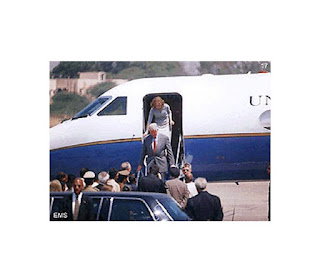
Bill Clinton was coming to town. A US President flying down to Hyderabad was significant. March 24, 2000 was the day he would arrive.

I was curious. What goes into the coming of the most powerful person on earth? That there is meticulous planning is anybody’s guess. That the security will be tight goes without saying. There were official functions arranged. Those we could anyway cover in the newspaper.  What more? What else?

So I got interested in the weather.

Weather? Well, the weather was clear. In any case, once he arrived at the Begumpet airport, he was to travel by road to the couple of functions that had been lined up for him. He would return to the airport by road and fly off.

The weather was clear. But I was still keen on checking it with the weather officials directly by personally meeting them. It was, actually, a means to an end. An idea that would open up a world for me.


The Meteorological Centre Hyderabad was situated on the airport premises, on the first floor of the building. With the security pass, I proceed to the office, spoke to the officials and the work was done. The weather was all clear. I could see it.

But I could see more. Planes landing. Not the regular flights. This was a separate area at the airport where all the activity was taking place. A large transport plane arrived. A helicopter emerged from it!

Hadn’t I come here for this very purpose to seeing for myself the activity that I was sure taking place in view of Clinton’s visit? I hanged around. There was intense activity. The US security personnel arrived. There were cartons that were unloaded. There was frenetic activity. This precisely was what I had anticipated. I made a mental note of the goings on. More aircraft arrived.  Cars in them. All this was providing me an insight into what happens before an Air Force One arrives carrying the most protected person in the world.


Then I dared to do something. I approached one of the US officials. I straightaway identified myself as a reporter. He appeared to be in a bit of a confusion. How could a reporter get access to where they were? I explained to him that I had come to the weather office and that I was on my way out and decided to come and talk to him. Only I knew, the weather office was to serve more than one purpose for me.

“What arrangements are being made for the President’s arrival?” I asked him. He looked to the left. Then to the right. He looked back. But refused to look at me or make eye contact. He literally pursed his lips. Well, I knew he was not authorised to talk. But I also knew that my responsibility was to talk to him – even if he were not to answer my questions.  I glanced around. Surveyed. It was interesting.

The next day, the copy in the newspaper made for interesting reading – of what goes into the arrival of a US President.


So far so good. But it got only better. Bill Clinton wears shirts that are made in Hyderabad, India. Now how’s that? What does it take for one to believe that? The shirts are made in Balanagar and I got to speak to the manufacturer. The shirts are made here under order and get sold under a certain brandname in the US – which is what Clinton wears. 

My friend Anand Vijayender tipped me off. Anand is my first friend in journalism. We worked together in Citizen’s Evening. He was in the desk as a sub-editor and I was a reporter. A newcomer I was, but he made me feel comfortable in an office atmosphere as this was my first job. Later, he quit journalism to pursue a different line. The journalist in him remained. He informed me about the shirt and through him I could also speak to the manufacturer. Locally, it sure was of interest.


Clinton came. He attended a programme at Mahaveer Hospital. We were escorted to a place arranged for the media. There was unobtrusive security. After the programme, Clinton got down the dais and came forward to greet the small crowd that had been invited to attend the programme. The barricades were there but all the same it was a close and pleasant encounter. Clinton left. Chief minister N Chandrababu Naidu had an informal one-on-one meeting with him in the director’s chamber – something that we got to find out.

After his programmes in the city, one important one at Hitec city, Clinton left. I was at the airport as VVIPs gave him a warm send off. Air Force One took off. The gathering too left. The plane was headed to Pakistan. Something interesting happened which I got to know about only later after he landed in Islamabad. The visit to Pakistan was significant as it was the first visit of a US President to that country after Gen Pervez Musharaff seized power in an army coup.


At Hyderabad, Clinton got into the aircraft and waved his ‘good byes’. The fact was that from that aircraft, Clinton then got into another aircraft that was stationed close to it at the Begumpet airport. Everyone waved to the aircraft that had taken off assuming he was in it. The aircraft with Bill Clinton in it took off only after a small gap. The US intelligence agencies had taken the extra security precaution as they wanted no security issues as the US President emplaned to Pakistan during a critical situation.

As for everyone, as I mentioned, they waived to an aircraft in which Clinton was not there!


January 12, 2022

You must come home for lunch, KCR told me.

       How KCR won his first poll battle with tact and other stories his friends in Chintamadaka told me


"Why? Don't you want to have lunch with me?" Chandrasekhar Rao asked me noticing the slight hesitation on  my face.

 "Tomorrow you are coming to my house and we will sit for lunch," he said. That was a decision. And he conveyed it strongly. I intervened. "It's just that we would like to meet you. Talk to you and understand the mission that you have taken up," I said.

"We will meet over lunch. That’s it," he said emphatically.  Of course, I was more than happy if the meeting happened over lunch as we would get more time to spend with him and get to more insight into how he was going his mission – a daunting task. At this point of time, no light was sighted at the end of the tunnel. It was as if he was only day-dreaming. There were critics. There were those who dismissed him. There were those who made light of him. There were those who laughed at him. There were those who chose to ignore him. There were those who felt he merited little attention. But there was one thing, Chandrasekhar Rao had been able to do. Arouse interest in the cause.

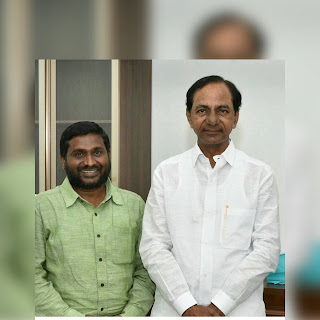
As part of my work as a journalist, I had been meeting the Telangana Rashtra Samithi founder-president Kalvakuntla Chandrasekhar Rao frequently after he launched the political party. This conversation about meeting again over lunch took place at the old office of the party a few years before the party moved into the  newly constructed building in 2006.

My then editor Kingshuk Mukherjee (who is now no more) wanted to understand the Telangana movement and the struggle for a separate state. Who best would be able to describe it other than the man who himself was spearheading the struggle? 

In the old office, KCR would usually sit at his table in a room adjoining the hall after he would address a press conference. During this time more informal talk would happen with reporters, across the table. On day, he seemed to be in a bit of a hurry. No one knew of any party programme that he had planned that day. It came as a bit of surprise. "I'm going to Abids," he said. "Looks like I need a new pair of footwear. I'm going to Bata where I usually buy my footwear," KCR said. And left.

It was on one of these occasions as we sat in his room for an informal talk that  I asked if my resident editor could drop by at the office to meet him and sought to know when it be a convenient time for him for us to chat with him.

"Why don’t you come to my house? Please bring him and we could talk over lunch," he said. "Just a meeting will do. Not necessarily over lunch,” I said. "Why? Don't you want to have lunch with me?" he said as if objecting to my refusal.

The next day, we drove down to his house at Nandinagar in Banjara Hills. We could spot him on the balcony.

"Have some biryani," he said as he served some in my plate. There was a big spread on the table. Biryani apart, rice and different curries. "You must taste these," he suggested and insisting on himself serving the food on  Mukherjee and another colleague’s plates. It was after the lunch that he spent a few hours describing what the need for a separate state was felt. “These are historical facts that you should know. Only in the backdrop of this will you be able to rightly interpret the movement that I have taken up,” he said. Even if it was the simplest of questions, he answered in detail.

Chandrasekhar Rao was by no means of description could one call a foodie. While he chose to serve us, there was hardly anything on his plate. This is what I got to see  subsequently also. During the multiple and regular meetings that he used to hold with leaders at his house on the first floor every day, lunch was not on the menu. Discussion would continue. He would make do with some 'mirchi bajji'.

On yet another occasion, we drove with him in his vehicle to Mahbubnagar where he was to visit a dargah. During the entire time of the journey, from Hyderabad, KCR talked about how it would be inevitable for the centre to give in to the demand for a separate Telangana state. We reached Mahbubnagar, and here too, he hardly ate anything while he ensured that there were proper arrangements for everyone to have their food, including the few of us who travelled with him in his vehicle. 

"They have all ganged up against a thin and lean man like me," he would say while addressing public meetings and attacking rival political parties accusing them of being a hurdle in the aspirations of Telangana people being achieved for a separate state. "I may be a 'bakka peesu (thin) but I am a 'mondi' (adamant) and one who never gives up," he would say addressing crowds. 

The post-lunch session was engrossing. Having explained his cause with facts and figures, he emphasized that he was wedded to his cause. "Nothing less than a separate state is acceptable," he said making his stand clear. That became a reality years later.

The beginnings:

The odds were stacked against him. The rival seemed invincible. Seemed. He had the numbers. Kalvakuntla Chandrasekhar Rao had the verve.

Something had to be done. Something had to be done quick.

Elections for the cooperative bank in Siddipet were being conducted. For the young man who was making his foray into an electoral battle, a win was what he was hungry for. If he lost, he would have lost nothing because the battle lines were clear, and it was evident that he would not make it. Who stood a better chance than him was evident from the fact that his supporters were known? They would stand by him in thick and thin. The rival, of course, did not think much of the Chandrasekhar Rao's challenge. He knew him. But from the outcome of the election, he became aware that he did not know him well enough. 

Chandrasekhar Rao had managed to pull all stops and be one up over him. The result came as a shocker. There was confusion all around. What did Chandrasekhar Rao do to emerge a winner in his very first electoral battle - a small beginning as it was?

"He had a trick up his sleeve," laughed a villager of Chintamadaka village in Siddipet of Telangana. As the battle lines were drawn and it became quite evident that Chandrasekhar Rao would in no way be able to make it, it set him thinking. Thinking hard. Strategizing. It was an 'out of the box' thinking. It needed more than imagination because the plan had to be executed without fail and the operation being kept a closely guarded secret.

As I sat under a tree in Chintamadaka village where Chandrasekhar Rao was born, the villagers who were playing a game of dice, stopped the game midway to talk to me. As an elderly man recounted the election, another man went about signalling to him to not spill the beans. They would rather it remain a closely kept secret about how Chandrasekhar Rao drew up the battle lines and caught his rivals off-guard. It needed tact. It needed to be kept a secret. It needed to be executed just in time. He won. 

Chandrasekhar Rao who had strategized to win his first election,  pursued his  political career, forming a political party - Telangana Rashtra Samithi - and also fighting for and achieving a separate Telangana state. As chief minister of India's newest state, he went on to lead his party to victory in the assembly polls again in 2018 and became chief minister for the second time.

I was curious to know from the  villagers how KCR had his first success in the bank cooperative polls. "He would have lost by one vote," the elderly man explained. "But he won by one vote," he said. But how did he manage it? "He was intelligent and sharp. Like he still is," the elderly man explained. There is a story behind what went into the winning strategy. And that something the rivals had no inkling about. 

Under the tree in Chintamadaka village, I played dice with the friendly villages. A close friend of KCR who studied with him recalled that as a child they would travel to school together and return to the village. “He had the power to grasp anything quickly. He would finish reading a book in just a matter of time,” he said. No wonder KCR has claimed that he has read 80,000 books in his life so far and he continues the habit.

The success in the cooperative bank polls was a huge win particularly in the face of a tough competition. He was not one to be deterred. KCR’s elder brother Kalvakuntla Ranga Rao was a youth Congress worker. KCR joined in his footsteps into politics but there came a time when he had to be on his feet alone as a politician as his brother passed away. The bigger challenge came when he was N T Rama Rao chose him as the newly founded Telugu Desam Party (TDP) to contest the Siddipet assembly seat on the party’s ticket. KCR did not have to think twice about it. If he had political ambitions, he would pursue them, come what may. Even if it meant, contesting against his own leader. KCR pitted himself against Congress leader Madan Mohan in the election. It was another matter that in the past he had worked for Madan Mohan’s success in the Siddipet assembly election. Now was his chance to climb the political ladder.

The fall was great. KCR lost. The fall was not crippling. In the next elections in 1985, KCR defeated Madan Mohan in Siddipet and since then it has remained his pocket borough.

“Even when he was a child, I noticed that he was a sharp learner. I did not have an iota of doubt that one day he would become the chief minister,” KCR’s brother-in-law P Yeshwanth Rao told me at Raj Bhavan during the swearing of KCR as CM for the second time after the triumph of TRS in the 2018 elections. 


January 11, 2022

Sonia Gandhi asked me to leave. I stood my ground. There was a reason.

Sonia Gandhi asked me to leave. I stood my ground. There was a reason.


“I did not want you here,” Sonia Gandhi said giving me a stern look. When she spoke, it was meant to be the final word.

I stood my ground. Not wavering. “How could you come here?” she questioned. And she repeated: “I do not want you here.” I had resolved not to move from that place.

April 10, 1999. The AICC president flew down to Hyderabad from Delhi in a chartered flight. It was a hot summer month. We, a group of reporters, from Hyderabad had reached Adilabad several hours earlier on that day. Sonia Gandhi was to speak to the families of those affected by viral fevers in the district. The families were brought to one place and they were all made to sit in chairs side by side.

When she said “I do not want you here”, she had meant every word of it. The Congress boss had also made it clear that she had no intention of talking to the media. In old ambassadors, we had travelled a long distance from Hyderabad with Congress leaders making the arrangements for us to cover the event. After having reached there, we were informed that Sonia Gandhi wanted to speak to the families and made it abundantly clear that she would not be meeting the media.

So, the natural question that arose was, “Then why did we have to come all the way from Hyderabad?” We had waited for several hours as she was behind schedule. We also had to travel back to Hyderabad and write our report for it to appear in the newspaper the next day. But what were we supposed to write?

Sonia Gandhi saw that I was being adamant. We were face to face and the Congress leaders accompanying her too had kept a respectable distance from her, except for one who was around for translation purpose. She did not quite understand why I was refusing to understand what necessarily were meant to be her orders.

In the hot sun, I had waited for Sonia Gandhi’s arrival for hours. Finally when her helicopter landed at the site, for some reason there appeared to be some confusion. She got down and briskly walked to the right side of the premises. Then she went to the left. I later found out about what the confusion was about. Avoidable here.

“How can me being there be an impediment for you Ma’am?” I asked the Congress leader politely. “I had clearly said I did not want the media to be around,” she said, her voice now firm.

If Sonia Gandhi had no intention of addressing the media, so be it. But certainly, our visit to Adilabad from Hyderabad to cover her visit cannot be a report which lacked details. It simply could not be a fruitless and meaningless report. The fact that she came, spoke to the families, and left, could have been reported as a one paragraph report sitting in Hyderabad itself.

“Ma’am, this is an arrangement we media have made ourselves. Not just me, there are other reporters at different places who are standing behind the families which are seated. All that we want to do is observe your interaction with them. Since you have come to find out about their problems, we also want to listen to the problems they are bringing to your notice. When you speak to them, I will not intervene,” I explained to her.

Sonia Gandhi now seemed to understand. She looked at the notebook and the pen in my hands.  I put pen to paper as she went about speaking to the families.


January 10, 2022

The tank bund 'breach' and how my mother ran carrying me to save my life

                The tank bund 'breach' and how my mother ran carrying me to save my life


There was panic all over. There was a breach to the Hussainsagar bund and the water from it was fast flowing like a flood. It was sure many houses would get submerged and if we stayed any longer in our house at Musheerabad, it would only be a matter of time before we also would be washed away.

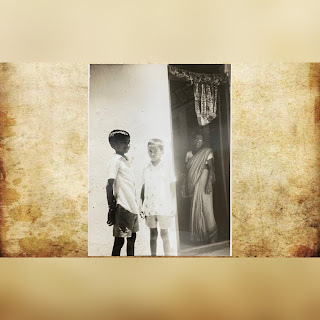
To my mother, the first priority was the last child in the family. And that was me. I was born on January 10, 1968, the seventh in the family. The four girls were elder to the boys. Among the three boys, was the youngest. We were staying on the premises of Wesley Church, Musheerabad where at least a dozen other families lived.


My mother Chilkuri Vajramma’s first reflex was to carry me and hold me tight. And then she started running as fast as her legs could carry her, in the opposite direction of Tank Bund. The other family members, brothers and sisters too started running. This happened sometime during 1971-72 when I was three years old or so.  There is nothing that has stuck in my memory. Several years ago, my elder brother Vasantha Rao (who has taken four of the pictures I have shared here)  had mentioned this incident to me.

I got reminded of this today  (January 10, 2022) as I celebrated my 54th birthday. I have no clear knowledge of the incident because I was a child. I called up my sister Susheela. She told me that several families had begun to run to safety. My father Chilkuri Samuel was away at work. “We did not even bother to lock the door of the house. The first instinct was to run to escape from the flood that was coming,” my sister told me recollecting the incident.


My elder brother recalled the incident. Everyone was at prayer at the church during the evening when someone brought the information about the Tank Bund breach. The entire locality headed towards Parsigutta and as it would be safe there getting on to a height and waiting on the top of the hill. Midway, my family stopped at Dayara market where a relative was staying. They got on to the first floor of the house. “We naturally since we were at a height in the building, we would be safe,” my brother Shyam Rao recalled. “I was in the front walking in front and I remember yelling at the others to walk faster,” he told me as I asked him about the incident. 


They had run for, perhaps a kilometre, when it became clear that the information that had spread about the breach on Hussainsagar bund was only a rumour.  But the rumour had spread wide. It took sometime for people to realise and understand that it indeed was a rumour. They heaved a sigh of relief and returned home. I understand, All India Radio, put out the news that it was only a rumour and that people should not believe it.


To my mother who gave birth to me.

To my mother who ran helter-skelter to save her youngest child. And to my loving father, here’s a  tribute from deep within my heart.


 Amma passed away 20 years ago in 2002. Nayana passed away 32 years ago in 1989.

 I cannot be thankful enough to them.


January 09, 2022

Balakrishna pulled my shirt. How I reciprocated grabbed eyeballs

                            Balakrishna pulled my shirt. How I reciprocated grabbed eyeballs


All this happened in front of hundreds of people.
They had all been invited from different parts of the country. The event was big. Former chief minister N T Rama Rao launched his film ‘Brahmarshi Viswamitra’ at the Ramakrishna Horticultural Studios at Nacharam in 1989 and I had gone there to cover the event for the newspaper I was working for.

Balakrishna was hyperactive that day. Perhaps the enormity of the event was too big to handle for the 29-year-old actor. Perhaps there were too many issues that he was sorting on location as his father was on the stage talking about the film. Or simply because Balakrishna was just being himself and doing what came naturally to him.

I was there with my photographer Devadas (who, sad to say, passed away a few years ago). Both film photographers and photographers from newspapers and magazines were there to record the big show of the film launch. And then the fracas with Balakrishna began near the podium.

Let’s hang there for a moment while I recount an incident that happened prior to that at the same venue. We took our place in the chairs arranged for all the invitees. Meenakshi Seshadri arrived. Resplendent and glowing. She was to play Maneka in the film. She passed by us and was escorted to the stage. After a while, there seemed to be some confusion. Some commotion. ‘Menaka’ had lost  one of her earrings! Word spread among the invitees about the lost earring of ‘Menaka’. We also participated in the search operation. And the earring was found just close to where we were seated! Meenakshi Seshadri got back her earring. The programme began after NTR’s arrival.

We walked towards the stage where all the action was. And that was where we encountered Balakrishna (who also happened to be me elder brother’s classmate in Nizam college). Not only that NTR’s make-up man from Chennai was our neighbour near Ramakrishna Cine Studies at Golconda cross roads. The make-up man’s sons were frequent visitors to our house – for the simple reason that my father could speak Tamil and both my elder brothers too could.

NTR himself, on most occasions would stand on the balcony in a building at the Ramakrishna Cine Studios and would acknowledge if we waved to him when I was going to school and college. He went on to launch his Telugu Desam Party(TDP) and came to power within 11 months of launching it. Despite his popularity, he was dethroned and Nadendla Bhaskar Rao became chief minister. NTR got to his chariot and huge crowds thronged him wherever he went in the following days. My elder brother and I went on our bicycle and waited for him as he returned to the Ramakrishna Cine Studios at Golconda cross roads. There was a sea of humanity. The crowds shouted slogans expressing their support to him. With folded hands, NTR acknowledged them. The coup of August 1984 brought more support for the actor-turned politician.  He was reinstalled. NTR came back to power with a thumping majority when he went in for polls in 1985.

The NTR who was so-near-yet-so-far for me was now someone with whom I was sitting across the table and talking. I had become a journalist in 1988 and straight away went to covering the chief minister’s office (CMO) and the Secretariat, the seat of power. At that time, Secretariat beat journalists could simply walk into the CM’s chamber and he would be gracious enough to sit with the reporters and answer questions. It once proved too burdensome for me when NTR placed his hand on my shoulder, leaned comfortable and spoke standing with us. How could you ask the CM to remove his heavy hand!?

NTR was NTR. Balakrishna was NTR’s son. So, let’s get back to the Ramakrishna Horticultural Studios at Nacharam, where ‘Brahmarshi Vishwamitra’ was launched. There was a hoard of photographers as I mentioned before. Everyone, of course, wanted to click pictures of NTR on stage and also have the crowd in the same frame. It was decided that all the photographers would congregate backstage and each one would be allowed – one at a time – to get on to the stage, quickly take a picture and come down giving time for the others in queue to do the same.

Balakrishna appearing out of nowhere pushed some of the photographers, including my own photographer. He wanted to set things in order and impulsively did what he felt was best to deal with the situation. The language that he used upset some of the other photographers. In polite terms, I told him that one had not expected him to use the choice of words he used. He became irritable and pulled me by my shirt.

There was a reason why we were in the front of the group of photographers. I was working for the evening newspaper “Citizen’s Evening”. I was literally pitted against him. The plan was to quickly take the pictures, rush to the office as there was a deadline for printing of the newspaper which came out in the afternoon itself. Chances were that, perhaps, even before the function ended, the newspaper would be out splashing photographs of the evening and also the news – with copies of it making it to the venue.

Where were we? Yes, Balakrishna pulled me by my shirt. It indeed was getting out of hand with no one even making an attempt to intervene. I had no choice but to reciprocate in my own way. That was when everyone around, who otherwise, were watching the goings-on as if it was a show by itself, decided to intervene – of course, as a defence for Balakrishna. He left the grasp on my shirt. And I let it go. He adjusted his collar and left. 

A new-born baby was put up for auction. How I busted the baby selling racket by a hospital.

                              A new-born baby was put up for auction. How I busted the racket

“A baby has been put for sale,” a source informed me. I decided to buy the baby. This, so that I could expose the buying and selling of babies at a hospital at Ameerpet in Hyderabad. The situation was quite tricky. I should react immediately and promptly before the baby got sold off and the sale closed. At the same time, I should not find myself on the wrong side of the law while engaging in this investigation. I called up the doctor and expressed an interest to see the baby as I was interested. There was no haggling about the amount on the phone. “Money is not an issue,” I informed the doctor because she said she would hand over the baby to whoever offered more money. “I’m coming over. Keep the baby,” I told the doctor. The incident took place in the early 1990s. 

With a friend of mine, I landed at the hospital in as less time as I could. If I had to expose the goings on in the hospital about sale of babies, I should have authentic information. Getting information first hand was the best in such a case. 
I held the infant in my arms. “What is the price you are willing to pay?” the doctor asked me. “You will have to pay a heavy price for this,” I responded but not loudly. I said it to myself deciding that the doctor will have to be taken to task for selling a baby. 
“Can I come tomorrow morning and take the baby?” I asked the doctor after assuring her about the amount I was willing to pay. It was something like Rs 5,000. “I am getting more enquiries and more money is being offered. Because of the interest that you have shown, I can wait only until tomorrow morning,” the doctor said with that warning. 
It was a different scene altogether in the morning. I wrote a detailed account of how the doctor at the nursing home had put up a baby for sale. With the report published in the newspaper, the local police acted promptly. They raided the nursing home, found the baby, verified my report to be true and rescued the baby. The new born baby which was only a few days old was handed over to a registered charity home by the police to be taken care of. 
From what I gathered later, the new born baby was an unwanted baby for the mother who had left the infant behind in the hospital itself. Such cases, I was given to understand were common in the hospital and therefore the sale of babies was also common. The worst part of the sale was that the babies were put on auction and the highest bidder would get to take home the baby. The doctor was warned by the police against engaging in selling of babies and no serious case was registered against her but an end was put to the racket. 

January 07, 2022

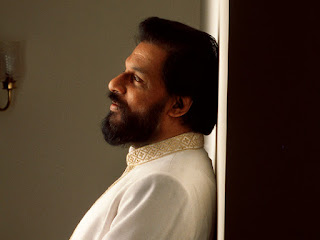
A hot chase. Me on a Luna trying to catch up with K J Yesudas in his ambassador

              A hot chase. Me on a Luna trying to catch up with K J Yesudas in his ambassador. 


I’d seen him on the screen singing “Gori Tera Gaon Bada Pyara”. He has discomfort in his throat. Takes lozenges. His throat gets cleared and he goes on to sing without any hitches. The song was from the film “Chitchor” released in 1976.  During the years following the release of the film, the advertisement of K J Yesudas recording the song in the studio and taking the lozenges was a regular feature. The image of Yesudas stayed in my mind.

Cut to 1988-89. The singer gave me a harrowing time, if I may take the liberty to use the fact. Or let me say it this way. It was an uphill task catching up with the man from whom I was seeking some answers.

I met Yesudas at the Press Club at Basheerbagh where he had come to address a press conference along with the Kerala community leaders in Hyderabad. They were holding a fest. I approached Yesudas and said I would like to interview him for the newspaper. He agreed immediately. But there was a hitch. Those who brought him told him that they had another programme to attend and that they had to leave. “Then where should he come?” he asked the organisers. “To Safilguda,” they said. “Will you come?” Yesudas asked.

There was another hitch. There was no space in the old ambassador car they had come in. “Never mind, I will follow you on my vehicle,” I told Yesudas. “Very well then. We will meet at Safilguda,” he said. What was the address? They did not tell. I did not know. The only way forward was following the car on my luna.

Luna, for those who do not know, was a moped. I had a 1978 model which was bought by my father from someone who had used it earlier. There were no google maps. No GPS. No location pin. No actual address known. No directions given. I started my luna even as the ambassador roared and picked up speed. I caught up with the ambassador at Basheerbagh cross roads. The car picked up speed again. The roads were much relatively clear than today. So there were no traffic jams. That became a disadvantage for me.

Which side was the car turning? Sometimes I was able to just be able to catch a glimpse of it and catch up raising the speed of my luna. It quite literally was a chase. The ambassador driver showed no compassion on me. I was sure he had no knowledge that someone on a luna was following the ambassador and that he could drive slowly just so that I could be in a position to catch up with it.

It was now beginning to become a race. A luna chasing an ambassador. I could not allow K J Yesudas to escape. But it was getting tough. Impossible. Do I give up on him? “No way,” I told myself. So, then what was the way? “Why take this trouble?” a part of me asked me. I was not required to do the interview. I was not asked to do it. It was not a job-assigned. Why then go out of the way to go through so much difficulty in trying to catch up with a speeding ambassador on a luna?

I refused to listen to the part of me speaking logic with me. It is unreasonable people, those who are impractical and those who refuse to understand the reality who make the world what it is. That was my response. When there is no way, they find a way. Here, I was losing track.

Now, I was literally at the cross roads. I had reached an area that I was not so familiar with. Which side could the car have gone? Do I give up? No harm. Best thing to do. Ideally. No choice. I got these answers from within. Now it was no longer about me wanting to interview K J Yesudas. Now, it was no longer about a luna chasing an ambassador. It was now about have a strong will to achieve what I had embarked upon. If I did to reach my goal, the milestones would remind me how far I had come despite the odds stacked against me. To my mind, the last mile stone should acknowledge the fact that I had done my best in the most trying of circumstances to reach the farthest possible.

The milestone did not say it. The railway gate at the Safilguda railway station said it. The car had driven past and the railway gate was down preventing motorists from crossing the track as a train was expected. Only a railway gate could stop the unstoppable me. It was here, after the gates lifted that I told myself that I had given my best try as I had no clue where the car had gone beyond the gate.

I turned back.

The chase continued. A different route. Through the Malayalee community, I learnt where Yesdas was staying. I was able get the landline telephone number. It was evening. I called up. “I could not catch up with you,” I told Yesudas. “But I do want to meet you,” I said. “I am leaving tomorrow morning,” Yesudas told me apologetically. I took the apologetic tone as an invitation. “Then I will meet you at the airport,” I told him. Starting a bit early from the place where he was staying, Yesudas reached the Begumpet airport to catch a flight back home. I saw him waiting in the lounge for me. I asked him all what I wanted to for the interview. It was now a done deed.  

Video of K J Yesudas singing 

January 06, 2022

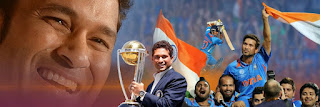
I patted the 15-year-old Sachin on the back and said, "You played well". He responded with a half smile.

  • I patted the 15-year-old Sachin and said, "You played well". He responded with a half smile. 


I sat there munching chips. It was comfortable in the press gallery at the Gymkhana grounds. I wasn’t a sports reporter but I wanted to be there to watch a Ranji cricket match between Hyderabad and Bombay on February 3, 1989. I’d played gully cricket. More for fun (as if if I had been serious, I would have outclassed many!).  

Being there at Gymkhana grounds in Secunderabad was for a purpose. A 15-year old Bombay school boy was already making waves and he was there playing for the Bombay team.  He had already made a stunning debut earlier scoring 100 not out in the Mumbai-Gujarat Ranji Trophy match at the Wankhede stadium (source: Wikipedia). He proved his mettle yet again with another century later.  

I enjoyed my chips. A friend of mine Sunil Robert was one of the commentators at the match. It was the pre-quarter final between Hyderabad and Bombay. I, for one, was not interested in who won or who lost in the match. That was not my cup of tea. I was more keen on observing the techniques and skills of  each of the players. To me, as an individual, it did not quite matter to me whether they scored big or took a wicket. The science behind their game was what I was more observant about.


                                                                (Pic from internet)

Quite naturally, all eyes were on the little lad from Mumbai who went in to bat for his side. The fact was that everyone was sure that he would make it big and that he was unstoppable going by the cricket he had exhibited so far. A test call could only be a matter of time (And it did come that year when he made his debut against Pakistan in Karachi).

As Sachin went on to bat at the Gymkhana grounds, much was expected from him. In fact, quite a lot of people there were conscious of the fact that they were watching one who was already a prodigy and had it in him to dominate the world of cricket. At least, this is what they wished. At the crease, Sachin showed prowess. That, however, did not mean more runs were coming off his bat. He played his game. Showed his skill. Demonstrated his ability so long as he was at the pitch. He got out. He hadn’t made a big score.

By the time he walked back into the dressing room from the ground, I quickly got down the make-shift steps of the press gallery where I was comfortable seated. “You played well,” I told Sachin as I patted him on the back. It got half a smile as a response.  But my appreciation for him was for the way he played the game – the science and techniques – were what I was appreciative of.

If Sachin was disappointed with his game, he did not show it. If he was happy at being appreciated and lauded, he did not express it.  He went into the dressing room, came back, sat with the other players and got engrossed in watching the match as it continued.

I went back to the press gallery. My chips were down. Someone had accidentally brushed against the paper plate and it had fallen. I could ask for more and get.

But the one who was more hungry was the boy Sachin. In that 1988-89 Ranji season, he exhibited his talent to become Bombay’s highest run getter. He scored an impressive 583 runs at an average of 67.77 (Again, my source is Wikipedia).

Sachin went on to make his debut in test cricket playing against Pakistan in Karachi from November 15-20. He disappointed. He was out for 15 runs bowled by Waqar Younis in the first innings. He did not get a chance to bat in the second innings in the match which ended in a draw.

The young and impressive Sachin that I watched at the Gymkhana grounds in Secunderabad, went on in his career to make and break records in the international area. He was also bestowed with the nation’s highest honour ‘Bharat Ratna’.

There were developments in my cricketing career too. At the Arts College in Osmania University, I had completed my BCJ during the year 1989-90. I went on to join M A (English). I was ‘allowed’  to be captain and ‘accommodated’ in my class cricket team.  We played against another department at the Osmania University cricket grounds. I scored a zero. I was back to where I belonged – to the pavilion. My chips were down.


January 02, 2022

For former Prime Minister V P Singh, I was a mysterious man


V P Singh’s gaze was fixed on my writing pad. I was scribbling furiously. He grew curious. 


I could make this out from the corner of my eye. I ignored it because I was busy. Too busy to even spare him a second to look at him sitting right in front of me in a chair and keenly observing me. There were other top leaders of various political parties who had gathered in the house of N T Rama Rao at Abids in Hyderabad. NTR, the leader of TDP was the president of the National Front, a group of political parties which came together as an alternative to the Congress and the BJP.

The room on the ground floor was packed. There were leaders and a motely group of reporters. This probably was in 1990. I could not find a chair in the room. That did not matter. I saw the centre table in the room could serve my purpose of placing my writing pad on it. I sat on the floor and went about scribbling non-stop as the leaders spoke to the media.

I could not afford to miss a single point of what they were saying. So, even looking at them as they spoke was not important for me. Only what they said was. V P Singh had been Prime Minister having donned the mantle under dramatic circumstances. N T Rama Rao too had made a dramatic entry into politics and had been chief minister. Prafulla Kumar Mohanta, the student leader-turned-politician was the chief minister of Assam. He was there too.

Then what was V P Singh doing looking at me and peering to have a glance at the notes I was taking? I was aware he was doing that. I felt it was not my business to ask him about his unusual behaviour. Nevertheless, it was nagging me. But it was nagging him more. Finally, inquisitiveness got the better of him.

“Can you read what you are writing?” V P Singh asked me, suddenly. One of the political leaders who was speaking at that time stopped to understand what was happening. All the leaders too glanced toward my notepad. They understood what had made V P Singh so curious. He was justified, in seeking the answer for the big question that was troubling him.

There were smiles all around. So, this is what was bothering V P Singh. So, it was for this reason that he kept looking at me and my notes.

“I can understand what I write,” I told him with a smile escaping my lips even as the others also found my handwriting to be too crooked for anyone to even attempt to decipher. V P Singh was not satisfied with my answer. I had to read a sentence to convince him that my handwriting was legible at least for me, if not for others.

Over the years, let me say decades, my handwriting has got better –  or more worse - for any else to read or understand.

(Pic: Google images of a previous meeting between the leaders in Delhi in 1989)

January 01, 2022

A stranger. An unforgettable kind act. And an expression of gratitude three decades later.

“That article which appeared in your newspaper was interesting. It was well-written,” the senior said. But next a bombshell was dropped. 

A group of journalists was travelling in a bus heading to cover an  event. The senior's sudden compliment came as a pleasant surprise.  I had written it myself and I assumed he saw my name on the article. To my surprise, he asked: “Who wrote the article?”

I had taken it for granted in the few seconds that he had chosen to appreciate someone who was new to the profession by referring to the article. I was a bit taken aback when he asked who wrote the article.  I told him it was my article that he had read. 

The senior’s silence was now defeating.  What started off as a conversation on a positive note had suddenly met with a road block. His silence was baffling.  Worse still, disappointment was writ large on his face. I asked him if there was anything wrong with the article. “It was okay.  Not so great but okay,” he responded. From “very well-written” to ‘okay” in just a couple of minutes, how could his comment change so much both in tone and tenor? 

I slowly understood from the conversation that followed that the senior that he was, he did not want to acknowledge that a newcomer could churn out such a piece as the one which had caught his attention. And so, he pursed his lips. He literally took back his appreciation and even appeared to regret his ‘slip of the tongue’ in lauding a 20-year-old fresh graduate who had forayed into journalism. 

Today, I remember him in a context. Contrasting him with another person who instantly became a friend and guide and took upon himself the role of an affectionate elder brother in 1988.

Pulipalupula Anandam is the one I am talking about. He introduced himself to me. This also happened while we were travelling to cover an event. He took the initiative to talk to me. He had seen me for the first time, so he enquired about me. 

Anandam was at least one decade my senior when I set foot in journalism. He took it upon himself to introduce me to the journalistic fraternity on different platforms related to professionals, which were greatly helpful me to. It has been 33 years since then. He has always been the same gentle and kind person. It has always been a pleasure running into him on certain occasions during our professional work but there never was a time wherein I could express my gratitude to him for being as welcoming as he was when he came across a newcomer like me. This remained in my memory.

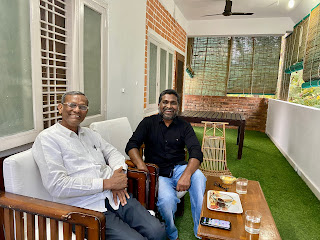
I had the great pleasure of meeting Anandam, now 67,  at my house.  Anandam lives a happy retired life with his family - wife, three sons and their spouses and six grandchildren. One of his sons is a software engineer, another a builder and the last one a civil engineer. 

When Anandam visited me at my house on December 31, 2021, I reminded him all that he had done for a stranger like me. Tears swelled his eyes. He removed his spectacles and wiped his tears. “I am unable to contain my emotions. I am overwhelmed by the small details that you remember to express gratitude,” Anandam said he regained his poise. “You do not have to be grateful or thankful at all,” he told me. 

But I know how much I value the unconditional regard and affection he had for me. One small act of kindness was enough to give me a sense of belonging in the fraternity.